IAMC

Author name: user

Weekly Roundup

IAMC Weekly India Human Rights Monitor (January 23, 2026)

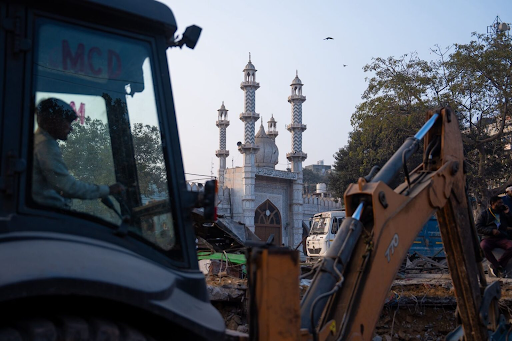
This Week at a Glance  This week, the names of Muslim voters in Gujarat, Rajasthan and Assam were deleted en masse from electoral rolls under the Special Intensive Revision, raising renewed accusations of targeted disenfranchisement. In Uttar Pradesh, police detained and fined Muslim men for praying inside a private home, while journalists in Kashmir faced intimidation for reporting on police profiling of mosques. An interfaith couple was murdered in Moradabad, a Christian pastor in Odisha was assaulted and humiliated by Hindu militants, and multiple reports flagged police inaction and selective justice in cases involving minorities.   Top Stories Targeted Muslim Voter Deletions in Gujarat, Rajasthan and Assam Hundreds of Muslim voters in Ahmedabad’s Jamalpur have been declared “dead” and removed from the electoral rolls during the ongoing Special Intensive Revision (SIR) process in Gujarat, triggering allegations of targeted voter disenfranchisement. In Jaipur, Rajasthan, testimonies from officials and documents have revealed the role of BJP leaders in mass Muslim Voter deletions. In Assam, an investigation found “forged” forms aimed at deleting thousands of Muslim voters.       12 Muslim men detained, fined in Uttar Pradesh for praying inside a private home The police in Uttar Pradesh’s Bareilly detained and fined 12 Muslim men for offering prayers inside a private house “without permission.” A video of the prayer was made viral online by several Hindu extremist accounts, accompanied by hateful comments targeting Muslims.           Police censor journalists in Kashmir for reporting mosque profiling Police in Jammu and Kashmir have ordered at least three journalists to sign a pledge vowing not to “disturb peace” in the region. The summons were issued after they had reported that police in the region were seeking information from mosques about their funding, management and budgets. A third journalist, an assistant editor with The Indian Express newspaper, was summoned to a police station in Srinagar, but did not sign the pledge. India has imposed several restrictions in the Muslim-majority region after revoking its constitutional autonomy in 2019, including heavy censorship.       Interfaith couple murdered in Uttar Pradesh, Woman’s brothers arrested A Muslim man and a Hindu woman who were in an interfaith relationship for over two years, were brutally murdered by the woman’s brothers in Uttar Pradesh’s Moradabad. Meanwhile, in Jhansi, a Muslim man and a Hindu woman dressed in bridal attire were found dead after allegedly hanging themselves.         Hindu militants assault Pastor, forces him to eat cow dung and chant ‘Jai Sri Ram’ A pastor from Odisha’s Dhenkanal was assaulted, forced to chant Jai Sri Ram, and made to eat cow dung by members of the Hindu militant group Bajrang Dal. The pastor, Bipin Bihari Naik, was attending a prayer meeting along with his wife and a few other Christians, when a mob of around 40 people gathered outside and assaulted him.       Hate crimes and discrimination in India This week, a fact-finding report by the Association of Protection of Civil Rights on recent violence in Uttarakhand documented a pattern of targeted attacks on Muslims, citing police inaction, selective application of the law since late 2023. In Uttar Pradesh, three police officials were held responsible for the custodial torture of a farmer at Agra and judge who had earlier ordered a case against police officials over the 2024 shooting of a Muslim man was transferred by the Allahabad High Court. In Karnataka, a Hindu extremist leader and murder accused Puneeth Kerehalli was released on bail after being detained for trespassing into houses of migrants. In Madhya Pradesh, Hindu rituals were held at the disputed Bhojshala–Kamal Maula Mosque complex in Dhar; and in Maharashtra, Shrikant Pangarkar, an accused in the murder of journalist Gauri Lankesh, won the Municipal Corporation election as an independent candidate.   Resistance & Organizing Bombay High Court Grants Bail to Activists Sagar Gorkhe and Ramesh Gaichor After Four Years The Bombay High Court granted bail to activists Sagar Gorkhe and Ramesh Gaichor in the Elgar Parishad Bhima Koregaon case, more than four years after their arrest. The court said they were entitled to bail on the same grounds as other accused who have already been released. With this order, all accused in the case except lawyer Surendra Gadling have now been granted bail. Jesuit priest and tribal rights activist Father Stan Swamy, who was also an accused, died in custody in July 2021 while awaiting trial.   Defenders of the Week This week, we’re spotlighting Shaik Salauddin, a Hyderabad-based trade union leader who led one of the most consequential labour mobilizations in India’s gig economy. As founder-president of the Telangana Gig and Platform Workers Union (TGPWU), Salauddin organised strategic flash strikes in December 2025 that mobilised over 40,000 delivery workers across cities to challenge the “10-minute delivery” model pushed by quick commerce apps. By combining advance strike notices, coordinated work stoppages, and public-facing demands for safer conditions and fair pay, the protests disrupted services and forced national attention on worker safety.   Voices from the Ground  “The lynching of Indian Muslims has become so brutally normalised that the country has learned to live with it. Not just news channels and reporters, but even opposition parties have stopped pretending to care. Worse is, even social media, which is known to outrage on such incidents, now looks away. It is as if mob violence against Indian Muslims has been accepted as routine, something which is not even worth condemning.” – Mohammed Zubair, Co-founder, AltNews IAMC in Action The latest episode of our podcast, Beyond the Taj, features a discussion with Professor Arjun Singh Sethi on the history of Muslim-Sikh solidarity in the diaspora. Watch or stream on Spotify, Apple Podcasts, and YouTube. What to Watch Next Week Our upcoming episode of Beyond the Taj features a conversation on building Hindu-Muslim unity in the diaspora with Ria Chakrabarty, Senior Policy Director at Hindus for Human Rights. Be sure to subscribe on all streaming platforms so you don’t miss the drop!
Op-Eds

Silence as citizenship: The burden of being a ‘Good Muslim’ in India

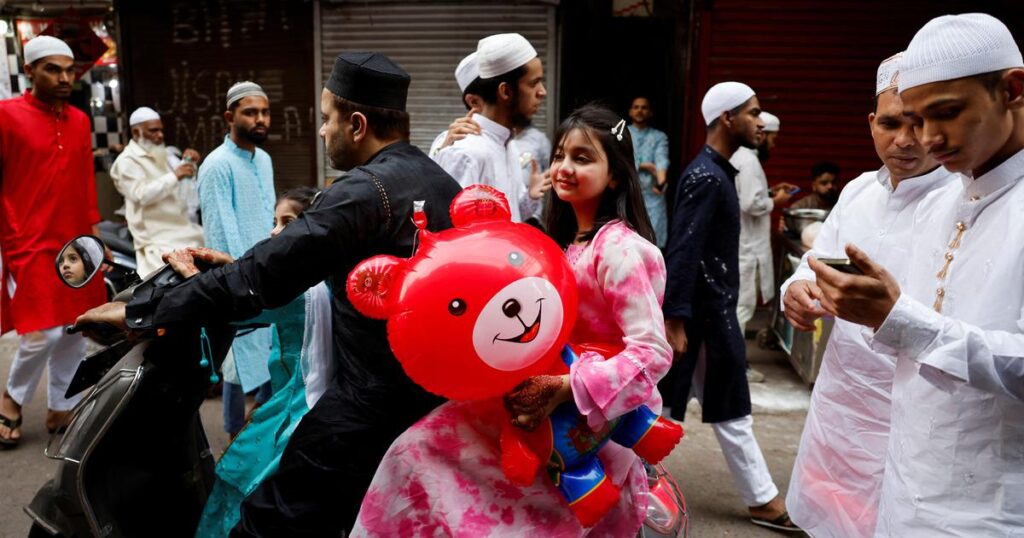
Indian Muslim are expected to be compliant, even as they are denied the ordinary exercise of rights enjoyed by other citizens. By Rasheed Ahmed Indian Muslims are often told that their survival depends on being exceptional. Not exceptional in achievement or contribution, but exceptional in political quietude. Exceptional in studied moderation. Exceptional in silence. Exceptional in proving, again and again, that they are unlike Muslims elsewhere – less demanding, less visible and less assertive in their claims on the state. This idea – it could be called Indian Muslim exceptionalism – has quietly shaped public discourse for decades. It once framed Indian Muslims as culturally refined but politically suspect; spiritually rich but civically conditional. With the rise of aggressive majoritarian politics, even this limited and conditional acceptance has begun to collapse. What remains is the expectation of political compliance without the assurance of cultural tolerance or civic equality. Rasheed Ahmed is the executive director of the Indian American Muslim Council. Read More >> Photo by Anushree Fadnavis, Reuters

Weekly Roundup

IAMC Weekly India Human Rights Monitor (January 16, 2026)

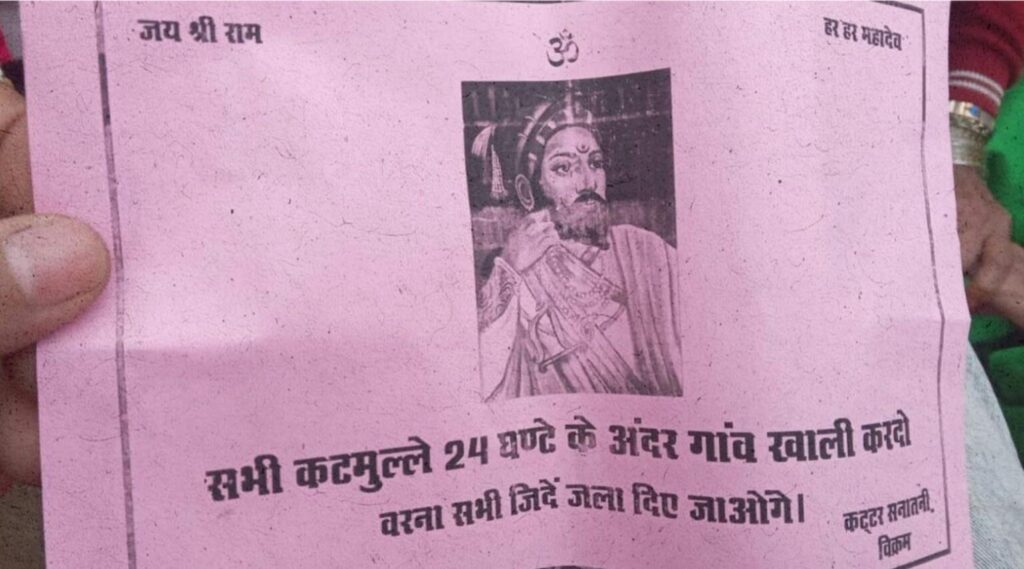
This Week at a Glance  This week, the U.S. Holocaust Memorial Museum ranked India among the countries most at risk of mass atrocities, as new data pointed to escalating abuses against religious minorities. Human rights groups documented at least 50 extrajudicial killings of Muslims in 2025, along with more than 1,300 incidents of hate speech targeting Muslims and Christians – both sharp increases from the previous year. Reports also described the forced expulsion of Bengali-speaking Muslims into Bangladesh despite valid citizenship documents, lynchings linked to cattle theft allegations, arson attacks targeting Muslim students, and demolition campaigns carried out without due process in Muslim neighborhoods. The week also saw mob violence and arson in Tripura, allegations of rape and murder in Bihar, explicit threats ordering Muslims to leave villages in Uttar Pradesh, and expanded state surveillance and prosecutions under harsh security laws.   Top Stories India Ranks 4th Among Countries Most at Risk of Mass Atrocities, U.S. Holocaust Museum Warns A new study by the U.S. Holocaust Memorial Museum warns that India is the world’s fourth most at-risk country for mass violence against civilians over the next two years. The report assessed 168 countries for the likelihood of intrastate mass killings, or the deliberate killing of civilians by either state or nonstate actors within that country. Notably, India ranks first among countries facing this level of risk that are not already experiencing widespread, large-scale violence.     At least 50 extrajudicial killings of Muslims reported in 2025, over half committed by Hindu extremists Data from the South Asia Justice Campaign shows that at least 50 Muslims were killed in extrajudicial killings in India in 2025, with 27 of those victims killed by Hindu extremists. Two children were among the 23 Muslims killed last year in incidents involving police, armed forces, or other state security personnel. The data also looks into arbitrary arrest, large-scale expulsion and refoulement of Bengali-speaking Muslims and other forms of atrocities faced by Muslims in India.       Over 1,300 hate speech incidents against Muslims, Christians in India in 2025 About 1,318 in-person hate speech events targeting religious minorities, primarily Muslims and Christians, were documented in an annual report released by the India Hate Lab (IHL). This represents a 13% increase from 2024, and a 97% increase from 2023. The hate speech included the propagation of conspiracy theories, calls for violence, appeals for social or economic boycotts, demands to seize or destroy places of worship, dehumanizing language, and speeches targeting Rohingya refugees living in India.       Security Forces illegally pushed 14 Bengali-speaking Muslims from Odisha into Bangladesh, Families Allege Fourteen Bengali Muslims from Odisha were pushed into Bangladesh by the security forces after being labelled as Bangladeshi nationals, their families have alleged. All the families possess valid identification documents including Aadhaar cards, voter ID cards, ration cards, and old land records. The victims include four children, five women, and five men.         Muslim man lynched to death over allaged cattle theft, Muslim student suffers arson attack A 45-year-old Muslim man, identified as Pappu Ansari, was beaten to death by a mob after he was accused of stealing cattle in Jharkhand’s Godda. Meanwhile, a 19-year-old Muslim student suffered burn injuries after an arson attack in broad daylight outside a college in Uttar Pradesh’s Moradabad.           Over 20 Structures Demolished in Muslim neighbourhood in Bengaluru In yet another demolition drive that has raised serious questions about legality, due process and state accountability, officials in Karnataka’s Bengaluru razed around 22 structures in a predominantly Muslim neighbourhood. Officials themselves later admitted that “the demolition was carried out without serving notice.” Meanwhile, officials in Uttar Pradesh’s Deoria have begun demolishing an allegedly “illegally” constructed shrine.   Hate crimes and discrimination in India This week, in Tripura’s Fatikroy, Muslim-owned homes, shops, and a mosque were set on fire by Hindu extremist groups despite police personnel being present. In Bihar’s Madhepura, a widowed Muslim woman, Hina Parveen, was abducted, gang raped and murdered. In Uttar Pradesh’s Sikandrabad, a threat note warning all Muslims to vacate the village within 24 hours or be burned alive was left inside the homes of Muslims. Meanwhile, a British doctor, Sangram Patil, was detained for over 15 hours at the Mumbai airport in connection with allegedly derogatory social media posts about the Bharatiya Janata Party and its leaders. The Jammu and Kashmir police have launched a large-scale exercise to collect information on mosques in the Valley, as well as their imams, muezzins, members of their management committees and their charity wings.   Resistance & Organizing Court orders complaint against 12 police officers in Sambhal mosque violence case A court in Uttar Pradesh’s Sambhal has ordered police to register a criminal case against 12 police personnel, including senior officers, over their alleged role in a shooting incident during violence near the Shahi Jama Masjid in November 2024. Anuj Chaudhary, a celebrated cop among Hindu supremacist groups, made headlines after the violence for making anti-Muslim remarks.       Court orders $5,000 compensation for Muslim minor jailed for two months The Patna High Court has held the arrest of a Muslim minor student by the Bihar police to be “unlawful” after he was kept in jail for over two months, and ordered the State to pay him over $5,000 as compensation, asserting that it could not remain a “mute spectator”.           Defenders of the Week This week we’re spotlighting Abdul Naeem, a resident of Dhaba village in Madhya Pradesh’s Betul district, who continued pursuing an education project despite being targeted by right-wing elements and administrative action. After investing nearly $22,000 of his personal savings and loans to build a school for tribal children, parts of the school building were demolished following false rumors labeling it an “illegal madrasa.” The demolition took place despite Naeem holding land diversion approval, a no-objection certificate from the panchayat, and having applied to the state’s School Education Department. Naeem has rejected the

Press Release

Half of Supreme Court Judges “Virtually Colonies of Government,” says Senior Advocate on Denial of Bail to Umar Khalid, Sharjeel Imam

Washington, D.C. (January 9, 2026) – Prashant Bhushan, Senior Advocate at the Supreme Court of India, slammed “roughly half” of Supreme Court judges as “virtually colonies” of Prime Minister Narendra Modi’s government, in remarks made at a briefing organized by the Indian American Muslim Council (IAMC) on the recent denial of bail to political prisoners Umar Khalid and Sharjeel Imam.    “Roughly half the judges in the Supreme Court today are virtually colonies of the government. Therefore, they are those judges who are unlikely to do anything or say anything or give any important judgment against the government,” said Bhushan. “This particular case was regarded as a very important case by the government, and therefore, they wanted to convey this message that.. anybody organizing protests against the government will suffer the same fate [as Umar Khalid and Sharjeel Imam].”   Bhushan further explained that the bench hearing Imam and Khalid’s bail pleas was “absolutely the junior-most bench in the Supreme Court,” adding, “To my mind, it must have been assigned to this bench because the government wanted it to be assigned to this bench.”   “It’s doubly unfortunate that we are losing the independence of the judiciary,” he emphasized. “So many judges… either subscribe to the ideology of the government or in some way or the other are beholden to the government or are not willing to give judgments independently and against the government.   Also speaking at the briefing were John Sifton, Asia Advocacy Director at Human Rights Watch, and Brian Tronic,  Director of the Fred Hiatt Program to Free Political Prisoners at Freedom House.   Sifton emphasized the importance of using diplomacy as a tool to highlight broader trends of anti-terror laws being weaponized to shut down dissent in India.   “We recognize that the government seems to be immune to outside pressure, but the fact of the matter is, both Prime Minister Modi and the BJP… do have an interest in maintaining a good international profile. It does get under their skin when they are viewed as committing human rights abuses, as being overbrought in their prosecutions. And when these cases get raised during foreign visits, it embarrasses them,” he said.    “The fact of the matter is, when there’s no more capacity to criticize and bring your grievances to a government, everything in your nation degrades,” he added. “A healthy nation is one in which the people can bring complaints to the government and have them addressed without fear that they’ll be prosecuted and put in jail for five years without even being convicted.”   “This is a flagrant violation of Articles 9(1) and 9(3) of the International Covenant on Civil and Political Rights, which enshrine a presumption of bail,” said Tronic. “What these cases highlight is that two men who were speaking out and criticizing their government have been essentially subjected to what seems to be indefinite detention… and this sends a message to anyone in India: criticize the government and you may be held indefinitely five years more without being convicted of a crime.”     

Weekly Roundup

IAMC Weekly India Human Rights Monitor (January 9, 2026)

This Week at a Glance  This week, five anti-CAA activists were released after more than 2,000 days in jail, but the Supreme Court denied bail to political prisoners Umar Khalid and Sharjeel Imam. Demolition drives were carried out in Uttar Pradesh’s Sambhal, near Delhi’s historic Faiz-e-Elahi Mosque, and in Assam’s Sonitpur, where over 1,200 Bengali Muslim homes were razed. Reports of brutal mob assaults on Muslim men over baseless “beef” and “illegal immigrant” allegations emerged from Rajasthan, Tripura, and Bihar. Opposition parties warned that proposed voter deletions affecting nearly 28 million people in Uttar Pradesh could amount to mass disenfranchisement. On the US front, IAMC held a briefing featuring global interfaith activists to condemn Bihar Chief Minister Nitish Kumar’s hate crime against a niqabi doctor. This week, we announced a webinar on the crisis of judicial accountability in light of Umar Khalid and Sharjeel Imam’s extended detention.   Top Stories Five Anti-CAA Activists Walk Out of Jail After Over 2000 days, Sharjeel Imam and Umar Khalid Denied Bail Five activists who protested against an anti-Muslim citizenship law in 2020, Gulfisha Fatima, Shifa Ur Rehman, Mohd Saleem Khan, Meeran Haider, and Shadab Ahmed were granted bail by the Supreme Court of India, after spending over 2,000 days in custody as undertrial prisoners. However, the Supreme Court denied bail to prominent anti-CAA activists Umar Khalid and Sharjeel Imam.       Demolition Drives Carried Out in Delhi, Assam and Uttar Pradesh Officials in Delhi carried out a demolition drive near the century-old Faiz-e-Elahi Mosque in Delhi’s Turkman Gate area and used tear gas and batons against residents protesting the demolition. Meanwhile in Assam’s Sontipur, around 1,200 homes of Bengali Muslim families were demolished in an eviction drive, and in Uttar Pradesh’s Sambhal, government bulldozers flattened a mosque and a madrasa.         Muslim Men Brutally Assaulted by Hindu Extremist Mobs Over Baseless Allegations A group of assailants brutally assaulted an elderly man in Jhalawar, Rajasthan after accusing him of eating beef and branding him a “Rohingya and Bangladeshi infiltrator.” In Agartala, Tripura, a group of assailants assaulted a Muslim rickshaw puller, buried him in sand, and tried to set him on fire in a brutal attempt to kill him. In Madhubani, Bihar, a Muslim labourer was assaulted after being labelled a “Bangladeshi”, leaving him severely injured.     Opposition Flags Mass Disenfranchisement as around 28 Million Voters Face Deletion The publication of the Uttar Pradesh Special Intensive Revision (SIR) draft electoral roll, which proposes the deletion of around 28 million voters – nearly 19 per cent of the state’s electorate. Opposition parties have labeled the move an attempt at large-scale disenfranchisement.     Hate crimes and discrimination in India This week, six Hindu militants from the Bajrang who were arrested for vandalizing Christmas decorations in Chhattisgarh’s Raipur, received a “hero’s welcome” after they were granted bail. The National Medical Commission withdrew approval for a medical institute in Jammu and Kashmir’s Reasi to run its MBBS course, weeks after the campus witnessed protests by Hindu extremists triggered by the institute’s admission list, which included an overwhelming number of Muslim students. Police in Jammu and Kashmir initiated an inquiry against a Kashmiri cricketer merely for sporting a Palestinian flag on his helmet during a private cricket tournament. Meanwhile, police across several districts of south and north Kashmir have identified and taken preventive action against individuals found using Virtual Private Network (VPN) services, following prohibitory orders.   Resistance & Organizing Preventive Detention Laws Are ‘Draconian’, Says Madras High Court More than 500 students gathered inside the Jamia Millia Islamia university to commemorate the anniversary of the December 15, 2019 violence, when police and paramilitary forces entered Jamia’s campus, fired tear gas, beat students and vandalised property. The crackdown left several students grievously injured, with at least one losing his eyesight permanently. Students marked December 15 as a “Resistance Day,” emphasising that the memory of the violence continues to shape political consciousness on campus.         Defenders of the Week This week, we’re spotlighting activists Srishthi Khanna and Prashant Pundir for standing their ground after facing coordinated doxxing, rape and death threats, and harassment over a video they shared online. The reel, which critically examined India’s growing political and military ties with Israel and the shrinking space for pro-Palestine solidarity, was deliberately misrepresented by right-wing influencers and portals, triggering a wave of abuse, misinformation, and the leaking of their personal details. However, they have refused to back down and are pursuing legal remedies against the harassment.   Voices from the Ground  “Heartening to see Gul, Meeran bhai, Saleem Khan, and Shifa ur Rehman walk out of jail. We hope Shadab joins them today.   Sharjeel, Umar, Khalid Saifi, Athar, Tahir Hussain, Salim Malik, and Tasleem must also be granted bail. They are not “conspirators.” They are the champions of a movement that stood for dignity, justice, and constitutional values.   The real conspiracy lies in framing them, incarcerating them, and silencing dissent. It is the state that stands accused here.”   –  Aysha Renna N, Anti-CAA activist IAMC in Action In light of the Supreme Court’s denial of bail to prisoners of conscience Umar Khalid and Sharjeel Imam, IAMC is bringing together a panel of international experts for a webinar on Friday, January 9 at 11am EST on the crisis of judicial accountability in India. Register now here.   In December, we held an online event bringing together activists from the Muslim, Hindu, and Christian communities to speak out against the targeting of Muslim women in India, in light of Bihar Chief Minister Nitish Kumar’s hate crime against a niqabi doctor. You can watch the full briefing here. What to Watch Next Week Our upcoming episode of our podcast, Beyond the Taj, features a discussion with Professor Arjun Singh Sethi on the history of Muslim-Sikh solidarity in the diaspora. It’ll be released next week, so be sure to watch or stream on Spotify, Apple Podcasts, and YouTube.

Press Release

IAMC condemns Indian Supreme Court’s denial of bail to Muslim political prisoners after 5 years without trial

Washington, D.C. (January 5, 2026) – The Indian American Muslim Council (IAMC) today strongly condemned the Indian Supreme Court’s denial of bail to two Muslim prisoners of conscience, Umar Khalid and Sharjeel Imam. The Court further denied Khalid and Imam the right to seek bail for an additional year, despite the fact that both men have already been imprisoned for five years without trial.    “Umar Khalid and Sharjeel Imam’s only crime was to declare that Muslims are as Indian as any other group,” said IAMC President Mohammed Jawad. “Five years later, the government of Prime Minister Narendra Modi continues to punish them for refusing to denounce the pluralistic values of the Indian constitution. It is a great shame that the Supreme Court is sacrificing its independence and commitment to justice in order to legitimize Modi’s crackdown on civil society.”    Khalid and Imam were arrested in 2020 under the Unlawful Activities Prevention Act (UAPA), India’s draconian anti-terror law, following their rise to prominence as student leaders of nationwide protests against the Citizenship Amendment Act (CAA), a discriminatory law that excludes Muslims from the right to fast-tracked citizenship. The men were accused of inciting an outbreak of violence in Delhi that year, resulting in over 50 deaths, most of them Muslim.    Investigations into the riots, however, showed that the main perpetrators were Hindu supremacist mobs emboldened by the violent rhetoric of elected officials from Modi’s Bharatiya Janata Party (BJP), rather than the speeches of peaceful protesters. Despite this, the Indian judiciary – which human rights defenders have criticized for its eroded independence under the Modi regime – has maintained that Khalid and Imam played a “central and formative role” in the violence.    The United States Commission on International Religious Freedom (USCIRF) has for years listed Khalid and Imam on the Frank R. Wolf Freedom of Religion or Belief Victims List, which profiles prisoners of conscience arrested either on the basis of their religious identity, or for championing the causes of vulnerable religious minorities.    Khalid in particular is known globally as a prisoner of conscience, with several global human rights organizations calling for his release, including Amnesty International, Human Rights Watch, and the International Committee of Jurists. New York City Mayor Zohran Mamdani wrote a personal note to Khalid, which was recently shared on social media by Khalid’s partner. Last week, eight members of US Congress, led by Representatives Jim McGovern and Jamie Raskin, sent a letter to Indian ambassador Vinay Kwatra urging Khalid’s release in accordance with international law.    “Umar Khalid has been detained without bail for 5 years under UAPA, which independent human rights experts have warned may contravene international standards of equality before the law, due process and proportionality,” the letter stated. “India must uphold the rights of individuals to receive a trial with reasonable time or to be released and be presumed innocent until proven guilty.”

Press Release

IAMC Welcomes Congressional Call for Bail and Fair Trial for Umar Khalid and Other Jailed Activists

WASHINGTON, D.C. (January 1, 2026) — The Indian American Muslim Council (IAMC) today welcomed a powerful letter from eight U.S. Members of Congress to the Indian Ambassador to the United States, Vinay Mohan Kwatra. The letter calls for the immediate granting of bail to Umar Khalid and other Muslim activists who have been languishing in jail for over five years on bogus and politically motivated charges related to the 2020 Delhi riots. The letter, led by Representative James P. McGovern and signed by U.S. Senators Chris Van Hollen and Peter Welch, along with Representatives Jamie Raskin, Pramila Jayapal, Jan Schakowsky, Rashida Tlaib, and Lloyd Doggett, highlights the shocking misuse of the Unlawful Activities (Prevention) Act (UAPA) to suppress peaceful dissent and target religious minorities.  The lawmakers expressed grave concern over the prolonged pre-trial detention of student leaders and activists including Umar Khalid, Sharjeel Imam, Gulfisha Fatima, Khalid Saifi and other, noting that their continued incarceration “may be linked to their religious identity as Muslims and their exercise of protected rights” The letter also mentioned that evidence used to charge Khalid for terrorism is dubious.  The lawmakers’ intervention comes amid growing global concern for Khalid’s case, including a written note of solidarity by New York City Mayor Zohran Mamdani, underscoring the widening international and diaspora-led alarm over his continued detention. “This letter from U.S. lawmakers is a significant step toward international accountability for the grave human rights violations occurring in India,” said Mohammed Jawad, President of IAMC. “Umar Khalid and his fellow activists are not terrorists; they are defenders of India’s constitutional values who have been silenced for daring to protest a discriminatory law. The fact that they have spent five years in jail without a trial is a mockery of justice and a clear indication that the Modi regime is using the legal system as a tool of religious persecution.” “We thank Representative McGovern and his colleagues for standing up for justice and for recognizing that the crackdown on Muslim activists in India is a matter of global concern,” said Safa Ahmed, Associate Director for Media at IAMC.  “Since 2014, the Indian government has systematically weaponized anti-terror laws to criminalize the Muslim community. The increase in attacks on religious minorities over the last decade is directly linked to the culture of impunity that allows activists to be jailed while perpetrators of hate and violence walk free. We urge the Indian government to heed this call and immediately release all political prisoners who have been unjustly detained.” IAMC joins U.S. lawmakers in calling for bail and fair trials for all activists languishing in jail under bogus charges. Furthermore, IAMC reiterates its demand that the U.S. Department of State accept the recommendation of the United States Commission on International Religious Freedom (USCIRF) to designate India as a Country of Particular Concern (CPC). IAMC also calls for targeted sanctions on the specific groups and leaders involved in the systematic persecution and wrongful imprisonment of activists in India. IAMC remains committed to working with international human rights organizations and democratic leaders to ensure that the voices of the oppressed in India are heard and that the fundamental rights of all citizens, regardless of faith, are protected.

Press Release

IAMC Condemns Anti-Christian Violence in India; Calls on US to Sanction Bajrang Dal and VHP

WASHINGTON, D.C. (December 29, 2025) — The Indian American Muslim Council (IAMC) has strongly condemned the unprecedented wave of harassment, vandalism, and physical violence directed at India’s Christian community during the 2025 Christmas season. Reports from across multiple Indian states reveal a harrowing and coordinated effort by Hindu far-right extremist groups to disrupt sacred prayer services, desecrate religious symbols, and strike terror into the hearts of worshippers during their holiest time of the year.  This latest surge in violence is not an isolated phenomenon but the peak of a decade-long trajectory of systematic persecution that has transformed India from a pluralistic democracy into a landscape of fear for its religious minorities. “The systematic targeting of Christians in India is no longer a series of isolated events; it is a clear, state-sanctioned campaign to marginalize religious minorities and achieve a vision of a nation where only one faith is supreme,” said Mohammed Jawad, President of IAMC. The Christmas season of 2025 has been marked by a disturbing level of ritualized intimidation and mob violence. In Raipur, Chhattisgarh, a violent mob affiliated with militant group Bajrang Dal and Vishwa Hindu Parishad stormed the Magneto Mall on Christmas Eve, smashing festive decorations and assaulting staff members while demanding to know the religious and caste identities of those present. In the Kanker district of the same state, the situation turned even more macabre earlier in December, when a mob asked for the exhumation of the body of a Christian man, claiming his burial on ancestral land was a violation of local norms. Similar reports have surfaced from the north and south of the country. In Assam, extremists disrupted celebrations at St. Mary’s English School, burning nativity scenes and destroying banners. In Uttar Pradesh, groups gathered outside cathedrals to recite sectarian slogans and perform rival religious rituals to drown out Christmas prayers, all under the pretext of preventing “illegal conversions.” The Quint has documented at least 10 such major incidents across several states, illustrating a national pattern of hostility that is often enabled by the silence or active complicity of local law enforcement. In Kerala, a traditionally inclusive state, even children were not spared; a group of minors participating in a carol procession was attacked, their instruments destroyed by individuals linked to radical groups who then falsely branded the children as a “criminal gang” to justify the assault. The Evangelical Fellowship of India’s Religious Liberty Commission has documented a sharp rise in targeted violence against Christians, from 601 incidents in 2023 to at least 830 in 2024. As of November 2025, the United Christian Forum (UCF) reported 706 incidents targeting Christians in the first eleven months of the year alone. Perhaps most damning is the long-term trend highlighted by the National Christian Convention in November 2025, which reported that incidents of violence against Christians have increased from 139 in 2014 to 834 in 2024, a nearly 500 percent increase over a decade.  Since 2014, the rise of Hindu nationalism has provided a scaffold for this persecution. The “anti-conversion” laws now active in over a dozen Indian states have become the primary weapon for vigilante groups. These laws are frequently used to arrest pastors on baseless charges of “allurement” or “force,” even when the “allurement” is as simple as offering free education or basic healthcare. In reality, these statutes serve to criminalize the very existence of the Christian faith in many parts of rural India. Under this decade of rule, the narrative has been shifted to paint Christians as “foreign elements” or “predators” seeking to destroy Indian culture, a rhetoric that is regularly echoed by high-ranking government officials and amplified by a compliant media. The broader persecution of Christians in India involves not just physical violence but also social and economic boycotts. In many tribal regions, Christian families are denied access to village wells, expelled from their ancestral homes, and barred from burying their dead in public cemeteries. “The violence we see this Christmas is the predictable outcome of a decade where hate speech has been rewarded and the rule of law has been bent to serve a majoritarian agenda. We demand that the Indian government immediately cease its rhetoric of division and uphold its constitutional duty to protect all citizens. The 500 percent rise in attacks over the last ten years is a stain on India’s democratic credentials that cannot be ignored by its international partners,”  said Rasheed Ahmed, Executive Director of IAMC.  IAMC calls upon the Indian Ministry of Home Affairs to ensure the immediate arrest of those responsible for the Christmas 2025 violence and to provide adequate security for Christian institutions. We also urge the international community, including the United States government to accept the United States Commission on International Religious Freedom’s recommendation to designate India as a Country of Particular Concern and to impose sanctions on groups including Bajrang Dal and Vishwa Hindu Parishad and leaders involved in the persecution of Christians in the country.

Press Release

Global interfaith advocates: India should hold officials accountable for violating bodily autonomy of Muslim women

Washington, D.C. (December 23, 2025) – At a Congressional briefing convened in response to a shocking hate crime in India, during which Bihar Chief Minister Nitish Kumar forcibly pulled down the face veil of Muslim doctor Nusrat Parveen during a government event, global interfaith activists condemned the Hindu far right’s escalating attacks on visibly Muslim women under Prime Minister Narendra Modi’s rule. “Hijab has become a political weapon; it’s political point scoring, especially in the context of India and South Asia,” said Shreen Mahmood, Board Member at World Hijab Day. “Muslim women sit at the intersection of all of this religious hatred, the patriarchy, state control. The same forces that claim to save Muslim women also silence them… Muslim women’s bodies have become a battleground for ideology.” “I think the violence of [Kumar’s action] lies precisely in its apparent casualness. What makes this incident especially revealing… is that it came from a political leader who’s often portrayed as moderate or secular,” said Anuradha Banerji, an activist-researcher from India representing the All India Feminist Alliance – National Alliance of People’s Movements (ALIFA-NAPM). “When somebody who’s seen as moderate or secular does this, and then other ministers come and they defend him, it just confirms how broad the problem has become within Indian society.” Banerji further pointed out that addressing this violation of fundamental rights requires political clarity.      “Public officials must be held accountable for violating bodily autonomy. Civil rights groups must insist on naming these acts as violations [and] resist the framing as a misunderstanding. If Dr. Parveen wants, there has to be some legal redress,” she said. “Most importantly, Muslim women must be centered as political agents and not just as symbols and tokens. This would mean listening to them, defending their choice, and recognizing that dignity is not conditional.” “Muslim women in India have been facing this form of harassment for years, barring them from basic human rights like education, access to medicine, and non-discriminatory treatment in the workforce,” said Safa Ahmed, Associate Media Director of IAMC. “This didn’t begin with Nitish Kumar. He is a symptom of a problem that has been brewing for years under Modi’s Hindu supremacist government.” “Over the past 20 years, Prime Minister Modi and the Hindu nationalist party [Bharatiya Janata Party] have brought hateful, gendered, Hindutva ideology into the mainstream – not just in India, but also in the United States and Europe,” said Reverend Neal Christie, cofounder of The Religious Nationalisms Project. “It puts Muslim women across India and in the diaspora at risk for retaliatory sexual violence for the perceived threat of Muslim masculinity. It has caused the displacement of peoples across India. It has caused the destruction of property. It has legitimated persecution and attacks upon entire communities.” “Those of us who are not Muslim need to support Muslim women’s right to choose how they want to move in the world,” said Ria Chakrabarty, Policy Director for Hindus for Human Rights. “Political parties need to clean house of any politician who is engaged in acts of sexual violence or indecency. And society must be clear here, it should be equally unacceptable to humiliate a woman regardless of her identity.”

Scroll to Top